SpaceX Starship Grounded After FAA Orders 63 Corrective Actions
By Maxwell | 2026-06-18T10:25:34.152Z
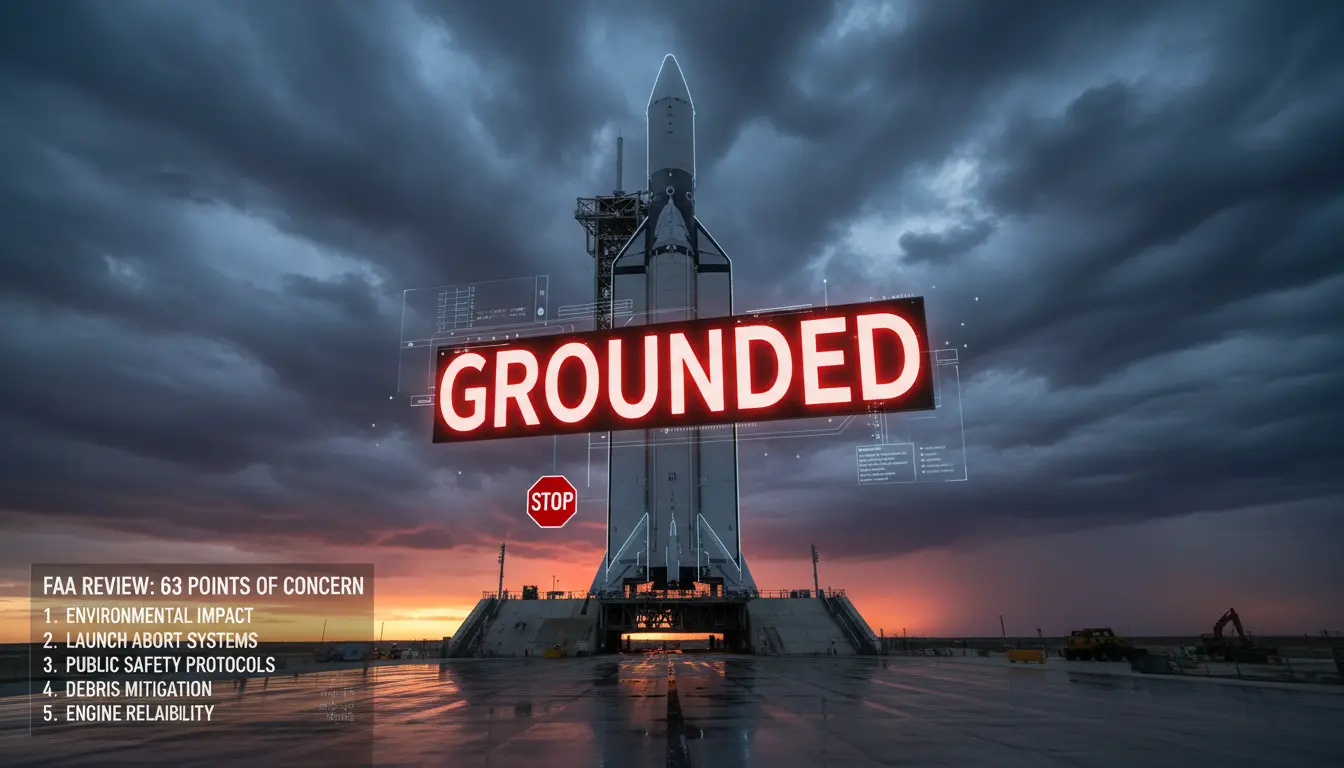
The U.S. Federal Aviation Administration (FAA) has ordered SpaceX to carry out 63 corrective actions on its Starship program
The U.S. Federal Aviation Administration (FAA) has ordered SpaceX to carry out 63 corrective actions on its Starship program, effectively grounding the vehicle until all required safety and compliance measures are completed.
The decision represents a significant regulatory setback for Elon Musk’s space company, which has positioned Starship as the cornerstone of its long-term deep space and Mars colonization ambitions.
FAA Safety Review Halts Starship Operations
According to the FAA directive, Starship flights will remain suspended indefinitely until SpaceX demonstrates full compliance with the mandated corrective actions. The agency’s intervention reflects ongoing regulatory scrutiny of commercial launch systems, particularly those involving large-scale, high-risk test vehicles.
The FAA emphasized that the corrective measures are necessary to ensure public safety, environmental protection, and operational reliability before any further launches are authorized.
Major Setback for Mars and Deep Space Plans
The grounding introduces a substantial delay to SpaceX’s development roadmap. Starship is intended to serve as a fully reusable launch system capable of transporting crew and cargo to Earth orbit, the Moon, and eventually Mars.
The suspension of flight activity is expected to disrupt planned test schedules and push back milestones tied to interplanetary mission readiness. This comes at a critical stage in SpaceX’s iterative testing program, where rapid launch cycles are essential for validation and refinement.
Scope of the Required Corrections
While the FAA has not publicly released the full list of 63 corrective actions, they are understood to span multiple technical and operational domains. These likely include:
Vehicle structural integrity validation
Engine performance and reliability assessments
Launch infrastructure and pad safety upgrades
Environmental compliance and impact mitigation measures
The breadth of the requirements highlights the complexity of certifying next-generation launch systems under federal regulatory standards.
Regulatory Context
The FAA’s decision underscores the strict oversight applied to commercial spaceflight operations in the United States. As launch systems increase in size and capability, regulatory frameworks are being actively enforced to balance innovation with safety assurance.