Global Economic and Technological Shifts: UK, Japan, Italy, Australia, and the Eurozone in June 2026
By Michael | 2026-06-18T09:41:20.443Z
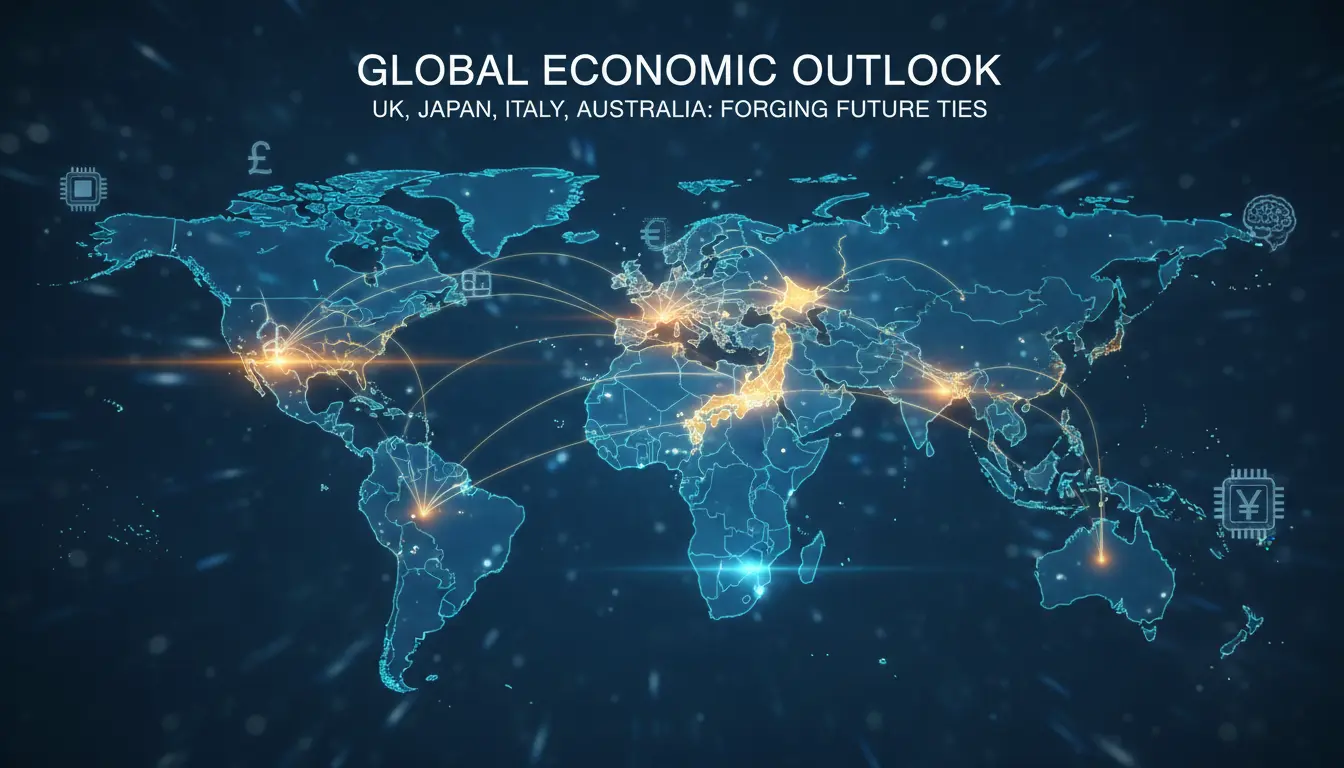
The United Kingdom and Japan have announced a major economic partnership valued at approximately £18 billion ($24 billion), reinforcing cooperation between two of the world's leading innovation-driven economies.
UK and Japan Strengthen Strategic Technology Alliance
The United Kingdom and Japan have announced a major economic partnership valued at approximately £18 billion ($24 billion), reinforcing cooperation between two of the world's leading innovation-driven economies.
A central pillar of the agreement is the newly established UK–Japan Frontier Technology Partnership, which focuses on advancing critical sectors including artificial intelligence, semiconductor manufacturing, and quantum computing. Japanese firms are also expected to invest more than £9 billion in British infrastructure and financial services, further expanding economic ties between the two nations.
Italy Defies Geopolitical Uncertainty
Despite heightened global tensions and ongoing concerns surrounding the conflict involving Iran, Italy's industrial sector demonstrated resilience in April. Industrial output increased by 0.5%, providing an encouraging signal for Europe's third-largest economy and highlighting the strength of its manufacturing base.
Australia Balances Economic Growth and Regulatory Oversight
Australia continues to display strong labor market performance, with total jobs increasing by 0.7% during the first quarter of 2026.
At the same time, financial regulators remain active. The Australian Securities and Investments Commission (ASIC) confirmed that it entered into two contracts with KPMG following investigations into the consulting giant, reflecting continued scrutiny of corporate governance and compliance standards.
Eurozone Faces Economic Challenges
The Eurozone economy contracted by 0.2% during the first quarter of 2026, raising concerns about growth prospects across the region.
In response, European policymakers are developing a "Made in EU" industrial strategy aimed at boosting domestic manufacturing, accelerating clean technology development, and reducing dependence on external supply chains. The initiative reflects Europe's broader effort to strengthen economic resilience amid global competition.
Growing Concerns Over AI Market Valuations
Meanwhile, analysts are increasingly warning about potential overvaluation in the artificial intelligence sector. France and Germany, two of Europe's largest economies, have seen substantial investment inflows into AI-related companies, prompting discussions about whether parts of the market may be entering speculative territory.
As governments and businesses continue investing heavily in emerging technologies, the balance between innovation, economic growth, and financial stability is becoming a defining issue for the global economy in 2026.